

Introduction:
The rise of AI in education
The world training picture in 2026 has gone through a big change. Artificial intelligence (AI) is not a futuristic concept; it is now an important partner for college students in schoolrooms and dorm rooms worldwide. From simplifying complex medical principles to streamlining writing techniques, AI gear has redefined what it means to be a cutting-edge student.
These technologies offer customized expertise enjoyment that helps students overcome instructional barriers and reach their goals more thoroughly than ever before. As we move forward into this digital age, the secret to real success lies in the responsible use of AI.
While those powerful tools can help with research and drafting, they’re designed to make your mind pretty, not update it now. Understanding the way to integrate those aids into your workflow is essential for any scholar looking to stay ahead.
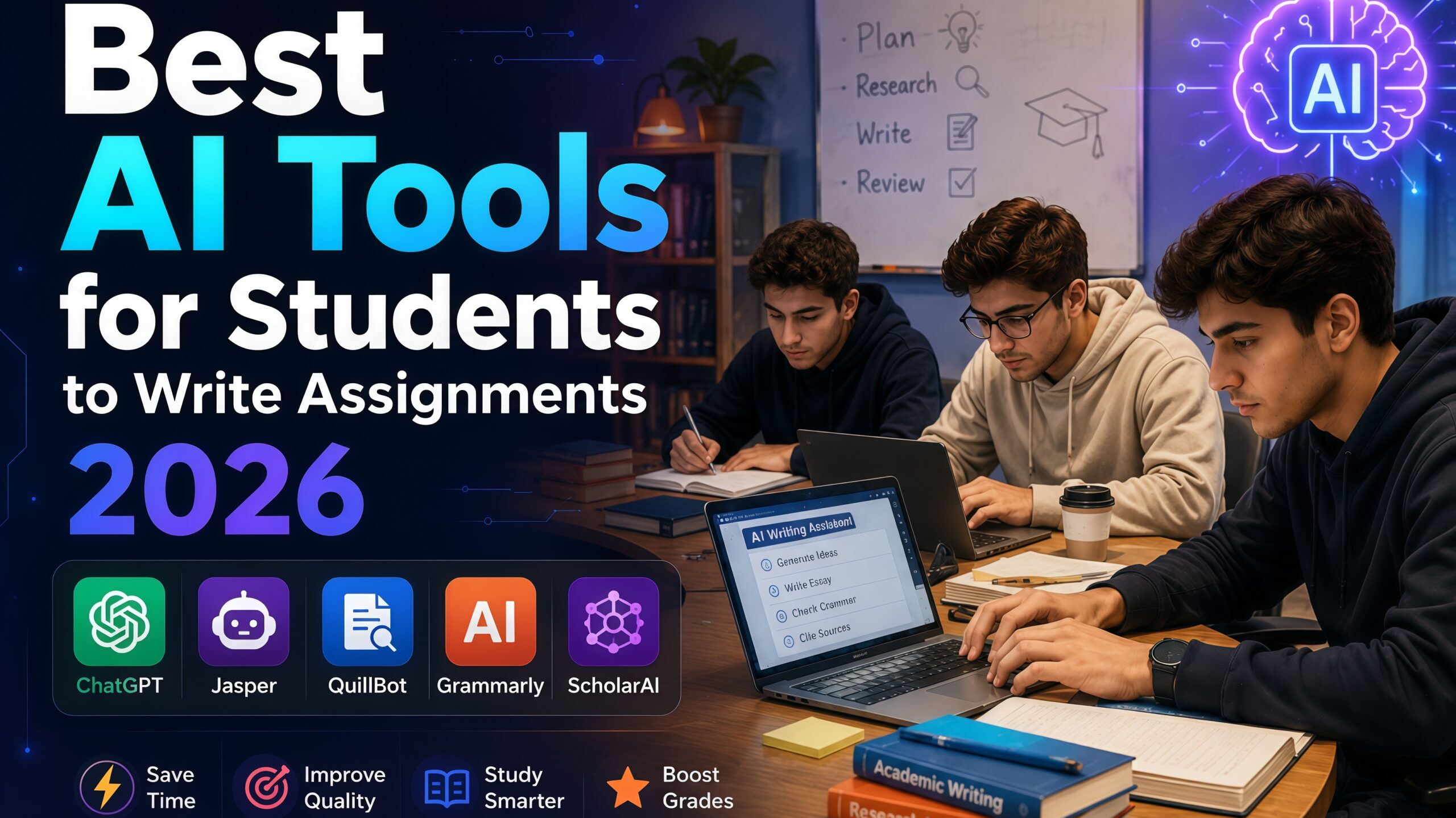
In this comprehensive manual, we can discover the most effective AI Tools for Students to Write Assignments, ensuring that you have the expertise to use them ethically, successfully and confidently.
The best AI writing assistants for essays and reports
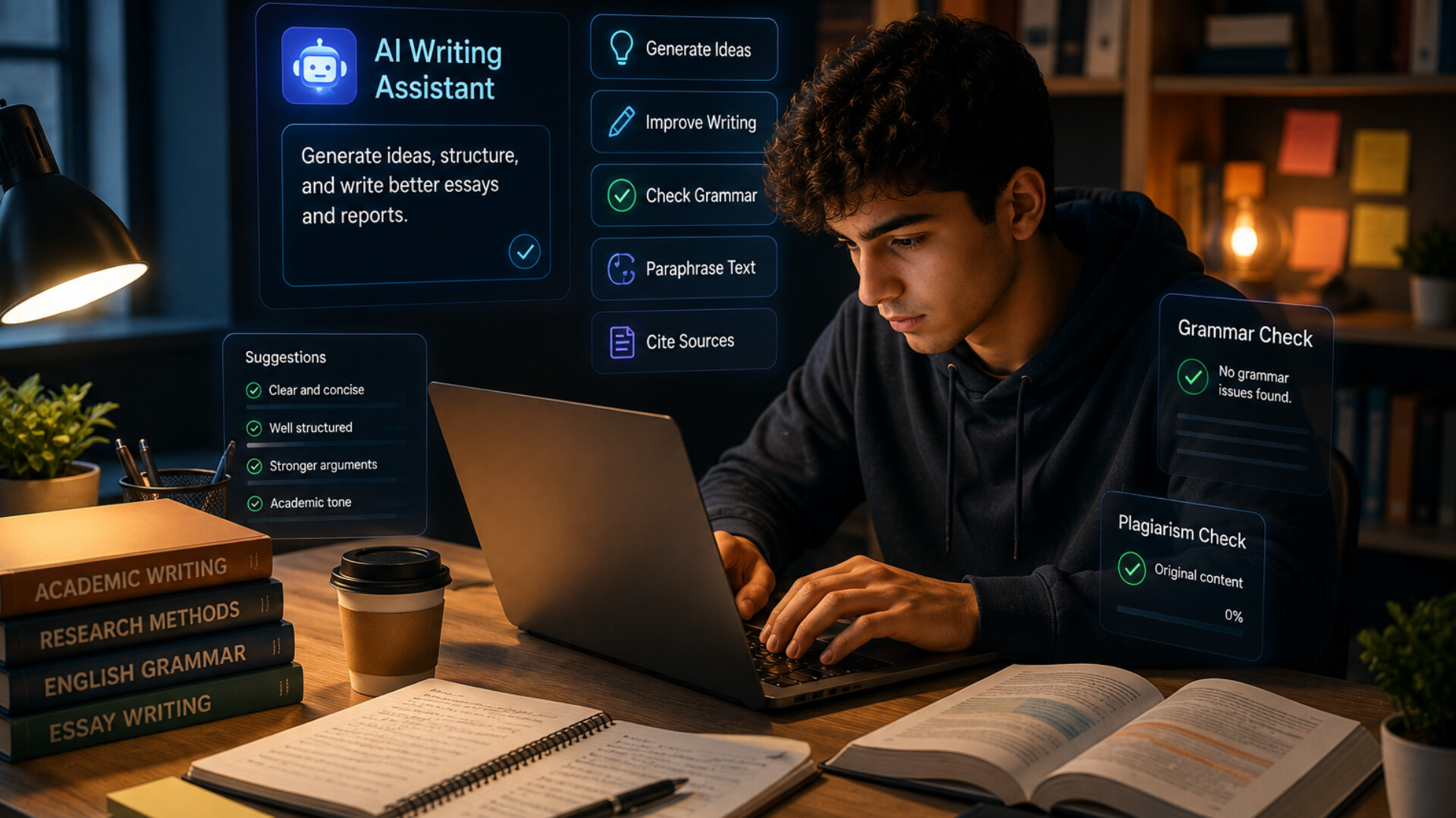
When it comes to writing long-form assignments, essays, or specific lab assessments, choosing the right AI writing assistant is crucial. These gears are no longer just simple spell checkers; In 2026, they have advanced into state-of-the-art cerebral companions that help you shape your mind and conquer the maker’s block.
ChatGPT and Claude: Today, the most well-known gear for students is conversational AI fads like ChatGPT and Claude. These platforms are first-rate for creating a solid outline for your essay. When viewing a blank page, you can ask these tools to suggest structure to your subject. For example, if you’re writing speculatively about climate change, you can ask for a five-paragraph outline that covers causes, consequences, and potential answers. This provides a clean road map, validating you with your own ideas about increasing real content.
Jasper AI: Professional long-form writing Jasper AI remains a pinnacle desire for college students working on more complex research papers or dissertation chapters. Unlike primary chatbots, Jasper is primarily designed for long-form content. It gives templates for new evidence, educational introductions, and end paragraphs. It enables everything through your report to maintain a constant tone, which is often difficult when writing over multiple days.
By using those aids, you can ensure that your writing is organized, expert, and clean for your professors to follow. Remember that a quality way to use those tools is to generate ideas and then refine the language to reflect your non-public voice and study.
AI tools for research and fact-checking

Finding the right statistics is the most important part of any academic work. In an age of inaccurate information, college students want tools that don’t just provide answers yet provide evidence. There are pleasant AI tools for deep learning and verifying data.
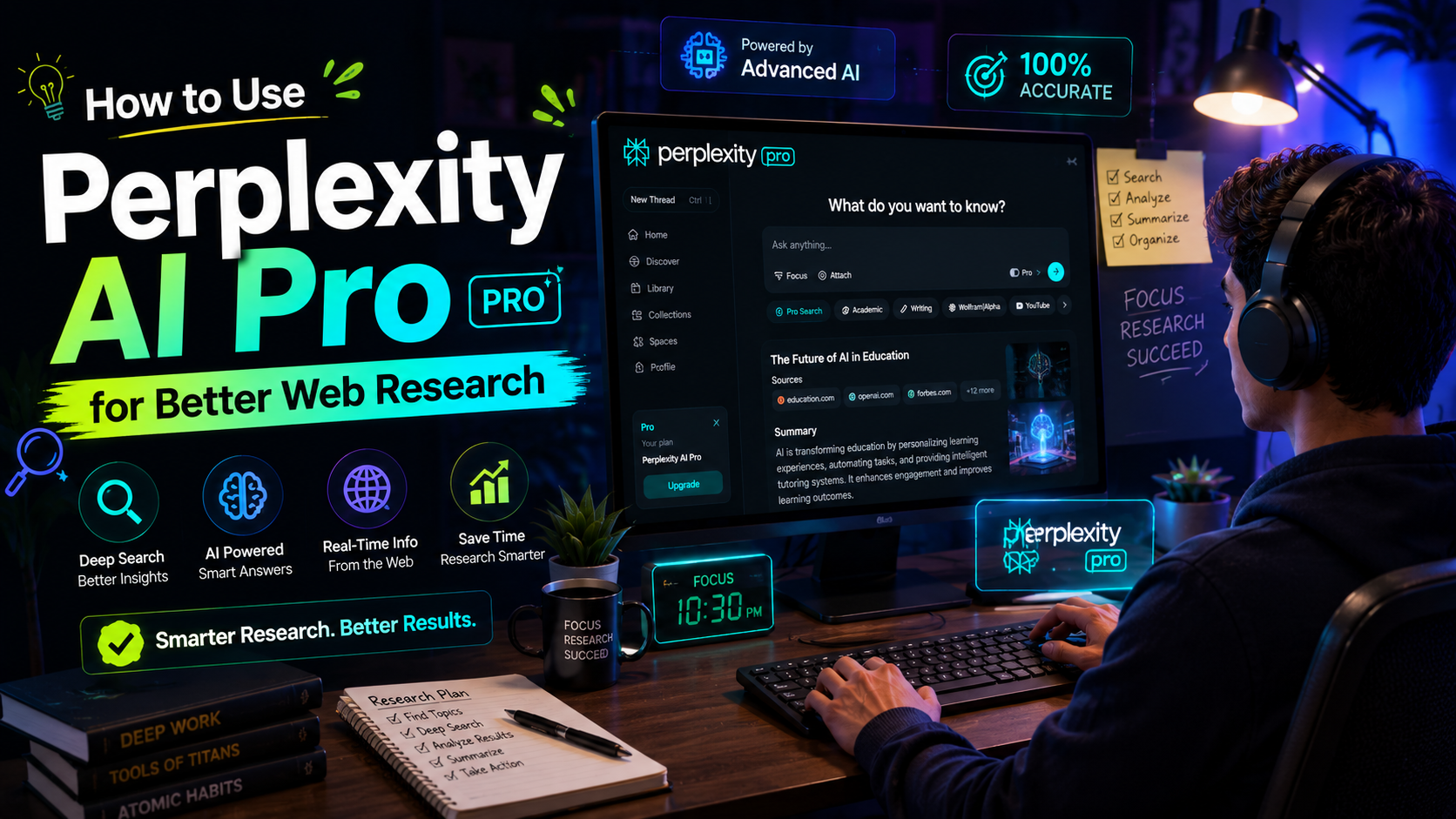
Perplexity AI: Real-time search companion The illusion has emerged as a favorite for AI students because it looks like a search engine with a brain. Unlike standard AI that “hallucinates” or will create information, Perplexity refers to its own resources.
Source transparency: Every claim that the AI makes is through a clickable link to the internet site in which the data has been converted to found.
Update information: It scans the web in real time, making it best for topics related to cutting-edge issues or current scientific discoveries.
Follow-up questions: Once answered, you could ask deeper questions to narrow down the study without having to start over.
Consensus: Access to scientific evidence For college students in technology, medicine, or social research, Consensus is a game changer. It is an AI search engine that finds peer-reviewed research papers in a simple way.
Evidence-based answers: It focuses on high-quality academic sources.
No bias: It shows you the part of the research that agrees or disagrees with the declaration, helping you to write a balanced and exceptional report.
Simplifying complex data: It can take a 20-page clinical paper and summarize important object findings in just a few sentences.
- Elicit: Your AI research assistant Elicit is designed to automate painstaking components of a researcher’s workflow. It is particularly useful for literary criticism and finding relevant papers, even if you do not have the exact keywords.
Grammar and paraphrasing tools for error-free instructions

Writing a first-class assignment doesn’t always have the right ideas; it’s also approximately offering them in reality and without errors. Overachieving students also make mistakes in grammar, spelling, or sentence structure. Fortunately, in 2026, AI gear has made it less difficult to place your images and ensure they look expert before you publish them.
Grammarly: More than just a spell-checker Grammarly is developed to educate complex AI writing. It doesn’t just get typos; that makes it easier to enhance the general nuance of your writing.
Advanced grammar fixes: It catches complex errors like misplaced modifiers and difficulty-verb handling problems that primary word processors routinely miss.
Quillbot: The ultimate paraphrasing tool Sometimes you have received fantastic information and yet you are at pains to put it into your own personal words. This is where Quillbot becomes an important tool for students.
Multiple modes: You can choose between “Fluency,” “Formal,” or “Creative” modes to interchange how your textual content is rewritten.
Vocabulary enhancement: It provides an integrated word list that suggests good word choices to make your writing sound more cutting edge.
Summarizing tool: If you’ve got an extended article, Quillbot can summarize important object points perfectly in a brief paragraph or bullet point.
Hemingway Editor: Improving readability Despite not having traditional AI like the others, the Hemingway Editor uses algorithms to make your writing certain. It focuses on readability by highlighting passive voice, overused adverbs, and complicated sentences, ensuring your work is direct and impactful.
Using AI the Right Way and Avoiding Plagiarism

As AI becomes more effective, colleges and universities are also using advanced gear to detect AI-generated content. Maintaining your individual voice and critical thinking is essential to staying ahead in this evolving educational landscape.
AI detection and plagiarism understanding It’s a common mistake to expect that copying and pasting from ChatGPT and different AIs isn’t plagiarism. Because AI generates text, it may not have a real picture of “you.”
AI detectors: Most professors now use tools like Turnitin or GPTZero that pick up patterns in AI-generated textual content.
Risk of hallucinations: Sometimes the AI gives statistics or quotes that don’t exist. If you put them in a project, it shows that you haven’t done any real studying.
Academic Integrity: Using AI to put your entire paper into writing is considered dishonest in most establishments, however using it to help you grasp the topic is generally encouraged.
How to maintain your “human voice” Fine assignments are the ones that demonstrate crucial questions and a personal angle. AI often sounds very robotic and repetitive.
Rewrite AI suggestions: Never use the first draft the AI gives you. Read, recognize factors, and rewrite using your personal vocabulary and sentence types.
Add personal examples: AI doesn’t know your life experiences or specific classroom discussions. Adding these details makes your paper special and “human.”
Manual fact-checking: Always verify the data provided by AI. This guarantees that your images are accurate and showcases your effort.
Conclusion
Integrating AI into education by 2026 has opened doors previously closed to plenty of college students. Using these tools, you can better manage your time, better enhance your writing, and gain access to complex reports in seconds.
However, the most successful students are people who treat AI as an effective assistant as opposed to the number one writer. As you circle forward, don’t forget that your critical question and particular angle is what your professors should just remember.








1 thought on “Best AI Tools for Students to Write Assignments 2026”